MALAYSIA ATTRACTS RM92.8 BILLION IN Q1 2026 APPROVED INVESTMENTS, EXPECTED TO CREATE OVER 50,000 NEW JOBS; DOMESTIC INVESTMENTS UP 13%
Released on: Monday, 08 Jun 2026 5:34PM
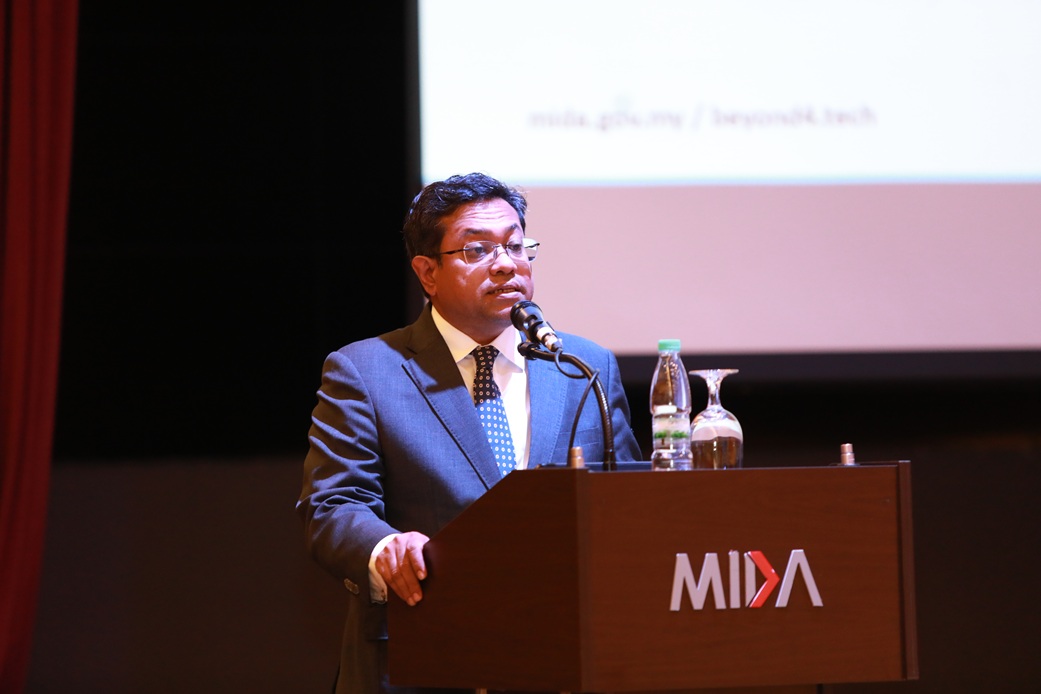
Datuk Sikh Shamsul Ibrahim, MIDA CEO
Japan emerges as the largest foreign investor with a 13.8x surge, while Selangor leads as the top recipient of approved investments
- For January to March 2026 (Q1 2026), Malaysia attracted RM92.8 billion in approved investments across the services (RM60.8 billion, 65.5%), manufacturing (RM24.1 billion, 26.0%), and primary (RM7.9 billion, 8.5%) sectors.
- While total investment value dipped by a marginal 0.2% y-o-y, approved projects are expected to create 50,226 new jobs, representing a 46.7% increase from the same period last year.
- Foreign Investments (FI) accounted for 60.5% or RM56.2 billion of total approved investments, while Domestic investments (DI) grew 13.0% y-o-y to RM36.6 billion, representing 39.5% of total approvals, reflecting growing confidence among Malaysian businesses.
- Top five (5) sources of FI[1] were led by Japan (RM21.5 billion, a 13.8x y-o-y surge), followed by the People’s Republic of China (RM10.1 billion), the United States (RM10.1 billion), Singapore (RM6.7 billion) and Thailand (RM2.5 billion).
- The top five (5) states that recorded the highest approved investments were Selangor (RM33.5 billion, a 3x y-o-y surge), Johor (RM16.9 billion), W.P. Kuala Lumpur (RM16.9 billion), Pulau Pinang (RM6.2 billion) and Sarawak (RM4.0 billion).
KUALA LUMPUR, June 8 (Bernama) -- Malaysia continues to demonstrate economic resilience amid global geopolitical uncertainty, securing RM92.8 billion in approved investments for the first quarter of 2026 (Q1 2026), with Japan emerging as the largest foreign investor, and domestic investment recording its strongest year-on-year growth in the reporting quarter.
The investments comprise 1,249 projects across the services, manufacturing, and primary sectors. While the total value recorded a marginal 0.2% decline compared to RM93.0 billion in Q1 2025, approved projects are expected to create 50,226 new jobs, representing a 46.7% increase from the same period last year, underscoring stronger labour market impact from approved investments. These approved investments will continue to support income opportunities and Malaysia’s low unemployment rate, underscoring Malaysia’s economic stability amid a challenging global environment.
Among foreign investors, Japan emerged as the largest source of approved investments with RM21.5 billion — a significant increase from RM1.6 billion recorded in Q1 2025 — followed by the People’s Republic of China (RM10.1 billion), the United States (RM10.1 billion), Singapore (RM6.7 billion) and Thailand (RM2.5 billion). The strong Japanese investment performance reflected the deepening economic ties between Malaysia and Japan under the Malaysia–Japan Comprehensive Strategic Partnership established in December 2023. Notably, 93.6% of Japanese approved investments in Q1 2026 were channelled into digital transformation activities, reflecting Malaysia’s growing role in regional high-technology and digital supply chains.
Selangor recorded the highest value of approved investments at RM33.5 billion, followed by Johor (RM16.9 billion), W.P. Kuala Lumpur (RM16.9 billion), Pulau Pinang (RM6.2 billion) and Sarawak (RM4.0 billion). The top three states have solidified their standing as global data centre hubs, underpinned by a proven track record in attracting investments from tech giants. This success is driven by the integration of Cyberjaya’s mature infrastructure, Johor’s strategic positioning as a key alternative to Singapore, and Kuala Lumpur’s role as the nation’s primary network connectivity and financial heart. MIDA’s Data Centre Task Force is now highly selective, rewarding speed to market only for operators who demonstrate genuine sustainability and long term commitment.
YM Tengku Datuk Seri Utama Zafrul Tengku Abdul Aziz, Chairman of MIDA, said, the Q1 2026 performance reflected Malaysia’s growing ability to attract investments that are more resilient, technology-driven and value-creating for the economy:
“Malaysia's Q1 2026 investment performance sends a clear signal - our economic fundamentals are strong. Both global and domestic investors continue to place confidence in this nation. With GDP growing at 5.4%[2]and Moody’s projecting Malaysia as the fastest growing A-rated economy over the next two years, we are proving that Malaysia is not just participating in regional value chains. We are emerging as a strategic hub for the industries that will define ASEAN and Asia’s next decade.”
“At MIDA, our focus is to turn this momentum into real value for Malaysians. Through #InvestLokal and the New Incentive Framework for the Manufacturing Sector introduced on 1 March 2026, we are prioritising quality, tech-driven investments that strengthen local industry participation and create high-value jobs. Malaysia is firmly positioning itself at the centre of global value chains - as a resilient, future-ready investment hub for the world,” he added.
SERVICES SECTOR ANCHOR INVESTMENT MOMENTUM
The services sector remained the largest contributor, accounting for RM60.8 billion or 65.5% of total approved investments, involving 731 projects expected to create 19,758 new jobs.
Top-Performing Sub-Sectors under Services:
● Information and communications: RM38.9 billion
● Real estate: RM15.6 billion
● Utilities: RM2.9 billion
● Distributive trade: RM1.1 billion
● Hotel & Tourism: RM1.1 billion
FI in the services sector rose by 7.9% to RM37.4 billion (61.5%), while DI contributed RM23.4 billion (38.5%). Growth was mainly driven by the Information and Communications subsector, which contributed RM38.9 billion, supported by growing global demand for AI and Digital Transformation. Investments in data centres and cloud computing alone, accounted for RM34.6 billion across 33 projects — representing 88.9% of the subsector’s total approvals.
Global investment momentum in digital infrastructure continues to strengthen. According to the United Nations Conference on Trade and Development (UNCTAD) Global Investment Trends Monitor No. 50 (January 2026), global greenfield investment in data centres exceeded USD270 billion in 2025, accounting for more than one-fifth of total global greenfield value, driven by rising demand for AI and digital connectivity. The report listed Malaysia among the top ten global destinations for data centre projects, reflecting growing investor confidence in the country's digital ecosystem and regional connectivity.
BMI, a unit of Fitch Solutions, has further noted that Malaysia is prioritising high-value, AIfocused data centre investments, with approximately 4.6 gigawatts of capacity planned or under construction.
This growth is further supported by the continued presence of major hyperscale operators such as Microsoft, Amazon Web Services, and Google, strengthening Malaysia’s position as a regional hub for digital infrastructure and next-generation technologies.
Notable Projects Elevating Malaysia’s Services Sector
● Leader Solar Energy III Sdn. Bhd.: A Malaysia-based solar energy project in
Kedah under the LSS5+ programme, with an installed capacity of 99.99MW (170 MWp) and an investment of RM261.7 million, is expected to generate renewable electricity and reduce carbon emissions by approximately 2.99 million tonnes of CO₂e over 21 years.
● Equinox Solar Farm Sdn. Bhd.: A Malaysia-based solar energy project in Kelantan under the Large-Scale Solar (LSS5+) programme, with an installed capacity of 99.99MW and an investment of RM197.9 million, is expected to reduce carbon emissions by 2.52 million tonnes over 21 years.
● BKH Solar Sdn. Bhd.: A joint venture between local renewable energy developer, Conextone Energy, and ENGIE, a global leader in low-carbon energy and services, was established to develop a 30MW solar farm in Bukit Kayu Hitam, Kedah under the Corporate Green Power Programme (CGPP). The project supports renewable energy adoption and Malaysia’s growing green manufacturing ecosystem through a long-term power purchase agreement with STMicroelectronics Malaysia.
MANUFACTURING SECTOR DRIVES HIGH-VALUE EMPLOYMENT OPPORTUNITIES
The manufacturing sector secured RM24.1 billion in approved investments across 501 projects—a 142.0% increase in project count year-on-year, supported by continued investor interest in high-technology and advanced manufacturing activities.
While total manufacturing investment value moderated by 20.8% year-on-year, this was largely due to a lumpy project from a single basic metal project worth RM6.6 billion approved in Q1 2025. Excluding this project, manufacturing investments recorded a positive growth of 1.0% year-on-year, with the higher number of manufacturing projects reflected a broader and more diversified pipeline of high-impact, technology-driven investments.
The sector remained the key driver of employment, with approved projects expected to create 30,468 or 60.7% of total expected jobs. The Managerial, Technical and Supervisory (MTS) index stood at 37.4%, signalling continued progress towards a high-skilled, knowledge-intensive economy in line with the New Industrial Master Plan (NIMP) 2030. Notably, 17.9% of these new jobs offer monthly salaries above RM5,000 — with the chemical industry recording the highest proportion at 34.7% — reflecting Malaysia’s continued move towards higher-value and higher-income employment opportunities.
FI accounted for RM16.1 billion (or 66.6%) of the total approved investments in the manufacturing sector, while DI accounted for 33.4% or RM8.0 billion.
Top Performing Industries:
● Electrical and electronics (E&E): RM6.0 billion
● Chemical and chemical products: RM3.9 billion
● Machinery and equipment: RM3.5 billion
● Food Manufacturing: RM3.3 billion
● Transport Equipment: RM2.2 billion
Notable Manufacturing Projects Strengthen Malaysia’s Industrial Base
● Nexperia Malaysia Sdn. Bhd.: A Netherlands-headquartered global semiconductor manufacturer will expand Discrete and IC Assembly/Test operations in Seremban with an additional investment of RM1.6 billion. The expansion is expected to double the facility’s existing production capacity while creating up to 500 additional skilled jobs and 800 semi-skilled jobs over time to support highly automated production line operations, advanced equipment maintenance, and smart manufacturing systems, to the benefit of Nexperia's global customer base and Malaysia's industrial ecosystem.
● WaferWise Semiconductor Sdn. Bhd.: A China-origin semiconductor company will invest RM700.0 million to establish a state-of-the-art 12-inch WLCSP (Wafer-Level Chip Scale Packaging) mass production facility, specifically optimised for automotive CMOS image sensors (CIS).
● Halo Laser Technologies Sdn. Bhd.: A US-based company and a spin-out from Stanford University is investing RM329.8 million in Malaysia’s semiconductor wafering sector. Specialising in proprietary laser-based manufacturing technologies, the company utilises advanced light-based solutions that deliver higher-quality and lower-cost silicon carbide wafers for applications including AI data centres, e-mobility, energy systems and industrial technologies. This investment strengthens Malaysia’s position in advanced semiconductor materials manufacturing while supporting the growing global demand for next-generation power and high-performance computing applications.
● Greatech Integration (M) Sdn. Bhd.: A Penang-based Malaysian automation engineering company will invest RM322.0 million into next-generation growth sectors, including the development of advanced power modules for AI data centres, advanced systems for autonomous vehicle (AV) fleet management and expanding into the semiconductor ecosystem by developing specialised modules and components for both front-end and back-end processes.
● Boston Scientific Medical Devices (Malaysia) Sdn. Bhd.: A United States medical technology company will invest RM308.0 million in Batu Kawan, Penang, to expand production of Intravascular Lithotripsy (IVL) devices for advanced cardiovascular treatment.
● Biocon Sdn. Bhd.: The India-origin company is expanding its operations in Johor with an additional investment of RM226.1 million, focusing on the production of insulin and insulin analogues, recombinant DNA (rDNA) therapeutic proteins, monoclonal antibodies, and sterile injectable products, as well as advanced drug delivery systems, including auto-injectors, cartridges, and pens.
● Aixtron Malaysia Sdn. Bhd.: A Germany-based leading provider of deposition equipment for the semiconductor industry, is investing RM200.0 million (~EUR40 million) in a Global Centre of Excellence for Manufacturing and Engineering focused on Metalorganic Chemical Vapor Deposition (MOCVD) technology. The investment introduces Malaysia’s first front-end deposition segment for compound semiconductors, strengthening the country’s role in the global value chain for next-generation materials such as Gallium Nitride (GaN) and Silicon Carbide (SiC). These advanced materials improve energy efficiency by reducing power losses and cooling requirements across applications, including AI data centres and electric vehicles (EVs).
● JPG Fuji Sdn. Bhd.: A joint venture between Johor Plantations Group Berhad (JPG) and Singapore-based Fuji Oil Asia Pte. Ltd. is investing more than RM200.0 million to develop a specialty palm oil refinery as part of JPG’s Integrated Sustainable Palm Oil Complex (iSPOC) in Sedili, Johor. Built with IR4.0 capabilities including process automation, digital monitoring and real-time data capture, the facility will produce higher value-added specialty oils and fats for domestic and export markets. Designed as a renewable energy-powered circular economy complex, iSPOC is also expected to create over 200 jobs for Malaysians through a TVET partnership with the Johor Skills Development Centre.
● Hanan Medicare Sdn. Bhd.: A privately-owned Bumiputera company will invest approximately RM194.9 million in Rawang, Selangor, to develop advanced biopharmaceutical, small volume injectables and galenical manufacturing capabilities. The facility will focus on the production of high value-added pharmaceutical products, including insulin, anti-diabetic drugs, contrast media, and general anaesthetics, while leveraging IR4.0 technologies, automation and digitalisation to enhance efficiency, reduce waste and strengthen Malaysia’s pharmaceutical self-sufficiency and healthcare supply chain resilience.
● Jemaluang Dairy Valley Sdn. Bhd. (JDV): A wholly Malaysian-owned joint venture will invest RM119.0 million in Mersing, Johor to develop a highly automated smart dairy farming and processing facility under the ECER Incentive Package, integrating advanced technologies and ESG-driven practices to strengthen national food security and modernise the dairy industry.
● Sheng Long Aqua Technology (M) Sdn. Bhd.: A China-based aquaculture and livestock feed producer under Haid Group, which is a world-leading agricultural enterprise powered by science and technology, will set up a manufacturing facility in Larut & Matang, Perak, focusing on the production of aquaculture feed for both domestic and regional markets. The facility will adopt automated production processes to enhance efficiency and product quality, while incorporating environmentally responsible practices and responsible sourcing to support sustainable aquaculture development in Malaysia.
PRIMARY SECTOR MAINTAINS STABILITY AMID GLOBAL HEADWINDS
The primary sector secured RM7.9 billion in approved investments across 17 projects, a sharp 418.2% year-on-year increase from RM1.5 billion in Q1 2025, driven entirely by oil and gas projects involving offshore development and exploration activities, particularly in Sarawak. The approved investments are dominated by domestic sources with RM5.2 billion (65.5%), while foreign sources contributed RM2.7 billion (34.5%). This uplift comes amid heightened global energy supply concerns following the Middle East conflict that erupted in late February 2026, prompting Asia-Pacific energy-importing nations to diversify their supply sources — with Malaysia’s upstream resources gaining renewed strategic relevance.
POSITIVE OUTLOOK WITH STRONG PIPELINE OF HIGH-IMPACT INVESTMENTS
Malaysia’s investment outlook remains resilient, supported by a steady pipeline of quality investment proposals. As at 5 May 2026, MIDA is facilitating a solid pipeline of 182 potential projects, collectively valued at RM38.3 billion.
MIDA is also in active discussions for an additional RM91.0 billion worth of potential investments—signalling sustained investor interest and confidence in Malaysia’s long-term economic direction and pro-business policies.
IMPLEMENTATION OF APPROVED MANUFACTURING PROJECTS
Malaysia’s investment performance is driven not only by approvals but also by strong implementation outcomes. Strategic platforms such as the National Committee on Investment (NCI), the Investment and Trade Coordination Action Committee, and the Invest Malaysia Facilitation Centre (IMFC) continue to assume a pivotal role in supporting smooth project execution.
Between 2021 and February 2026, the National Committee on Investment approved 5,148 manufacturing projects, of which:
Annual data shows that:
Examples of implemented projects are provided in Appendix I.
Strong implementation rates continue to reflect investor confidence and the effectiveness of Malaysia’s investment facilitation ecosystem, supported by close inter-agency coordination and MIDA’s investor aftercare services.
Datuk Sikh Shamsul Ibrahim Sikh Abdul Majid, Chief Executive Officer of MIDA, said Malaysia’s investment performance in Q1 2026 reflects the country’s strong facilitation and project execution capabilities:
“Despite continued global headwinds, Malaysia remains firmly on investors’ radar, supported by clear policies, strong economic fundamentals, and our ability to move projects from approval to operationalisation. The Asia Manufacturing Index 2026, ranks Malaysia second in Asia after China. This is our highest position in the index to date, and it is matched by results on the ground: of the manufacturing projects approved since 2021, over 85% had reached various stages of implementation as of February 2026.”
“At MIDA, we remain focused on supporting investors throughout their implementation journey. Through facilitation platforms such as IMFC and close collaboration with relevant ministries and agencies, we continue working to strengthen coordination and accelerate project execution. This remains an important pillar in reinforcing Malaysia’s investment competitiveness,” he added.
Looking ahead, Malaysia’s resilient economic fundamentals, growing domestic investor participation, and strong pipeline in high-value sectors — including semiconductors, AI infrastructure, renewable energy and advanced medical devices — continue to position the country well for long term growth despite ongoing global uncertainty.
Note to Editors: This media release carries official statements from two (2) MIDA officials — YM Tengku Datuk Seri Utama Zafrul Tengku Abdul Aziz, Chairman of MIDA; and Datuk Sikh Shamsul Ibrahim Sikh Abdul Majid, Chief Executive Officer of MIDA. Media partners are kindly requested to attribute and carry all two quotes in full to ensure balanced representation of the government’s perspectives on Malaysia’s Q1 2026 investment performance.
The manufacturing sector secured RM24.1 billion in approved investments across 501 projects—a 142.0% increase in project count year-on-year, supported by continued investor interest in high-technology and advanced manufacturing activities.
While total manufacturing investment value moderated by 20.8% year-on-year, this was largely due to a lumpy project from a single basic metal project worth RM6.6 billion approved in Q1 2025. Excluding this project, manufacturing investments recorded a positive growth of 1.0% year-on-year, with the higher number of manufacturing projects reflected a broader and more diversified pipeline of high-impact, technology-driven investments.
The sector remained the key driver of employment, with approved projects expected to create 30,468 or 60.7% of total expected jobs. The Managerial, Technical and Supervisory (MTS) index stood at 37.4%, signalling continued progress towards a high-skilled, knowledge-intensive economy in line with the New Industrial Master Plan (NIMP) 2030. Notably, 17.9% of these new jobs offer monthly salaries above RM5,000 — with the chemical industry recording the highest proportion at 34.7% — reflecting Malaysia’s continued move towards higher-value and higher-income employment opportunities.
FI accounted for RM16.1 billion (or 66.6%) of the total approved investments in the manufacturing sector, while DI accounted for 33.4% or RM8.0 billion.
Top Performing Industries:
● Electrical and electronics (E&E): RM6.0 billion
● Chemical and chemical products: RM3.9 billion
● Machinery and equipment: RM3.5 billion
● Food Manufacturing: RM3.3 billion
● Transport Equipment: RM2.2 billion
Notable Manufacturing Projects Strengthen Malaysia’s Industrial Base
● Nexperia Malaysia Sdn. Bhd.: A Netherlands-headquartered global semiconductor manufacturer will expand Discrete and IC Assembly/Test operations in Seremban with an additional investment of RM1.6 billion. The expansion is expected to double the facility’s existing production capacity while creating up to 500 additional skilled jobs and 800 semi-skilled jobs over time to support highly automated production line operations, advanced equipment maintenance, and smart manufacturing systems, to the benefit of Nexperia's global customer base and Malaysia's industrial ecosystem.
● WaferWise Semiconductor Sdn. Bhd.: A China-origin semiconductor company will invest RM700.0 million to establish a state-of-the-art 12-inch WLCSP (Wafer-Level Chip Scale Packaging) mass production facility, specifically optimised for automotive CMOS image sensors (CIS).
● Halo Laser Technologies Sdn. Bhd.: A US-based company and a spin-out from Stanford University is investing RM329.8 million in Malaysia’s semiconductor wafering sector. Specialising in proprietary laser-based manufacturing technologies, the company utilises advanced light-based solutions that deliver higher-quality and lower-cost silicon carbide wafers for applications including AI data centres, e-mobility, energy systems and industrial technologies. This investment strengthens Malaysia’s position in advanced semiconductor materials manufacturing while supporting the growing global demand for next-generation power and high-performance computing applications.
● Greatech Integration (M) Sdn. Bhd.: A Penang-based Malaysian automation engineering company will invest RM322.0 million into next-generation growth sectors, including the development of advanced power modules for AI data centres, advanced systems for autonomous vehicle (AV) fleet management and expanding into the semiconductor ecosystem by developing specialised modules and components for both front-end and back-end processes.
● Boston Scientific Medical Devices (Malaysia) Sdn. Bhd.: A United States medical technology company will invest RM308.0 million in Batu Kawan, Penang, to expand production of Intravascular Lithotripsy (IVL) devices for advanced cardiovascular treatment.
● Biocon Sdn. Bhd.: The India-origin company is expanding its operations in Johor with an additional investment of RM226.1 million, focusing on the production of insulin and insulin analogues, recombinant DNA (rDNA) therapeutic proteins, monoclonal antibodies, and sterile injectable products, as well as advanced drug delivery systems, including auto-injectors, cartridges, and pens.
● Aixtron Malaysia Sdn. Bhd.: A Germany-based leading provider of deposition equipment for the semiconductor industry, is investing RM200.0 million (~EUR40 million) in a Global Centre of Excellence for Manufacturing and Engineering focused on Metalorganic Chemical Vapor Deposition (MOCVD) technology. The investment introduces Malaysia’s first front-end deposition segment for compound semiconductors, strengthening the country’s role in the global value chain for next-generation materials such as Gallium Nitride (GaN) and Silicon Carbide (SiC). These advanced materials improve energy efficiency by reducing power losses and cooling requirements across applications, including AI data centres and electric vehicles (EVs).
● JPG Fuji Sdn. Bhd.: A joint venture between Johor Plantations Group Berhad (JPG) and Singapore-based Fuji Oil Asia Pte. Ltd. is investing more than RM200.0 million to develop a specialty palm oil refinery as part of JPG’s Integrated Sustainable Palm Oil Complex (iSPOC) in Sedili, Johor. Built with IR4.0 capabilities including process automation, digital monitoring and real-time data capture, the facility will produce higher value-added specialty oils and fats for domestic and export markets. Designed as a renewable energy-powered circular economy complex, iSPOC is also expected to create over 200 jobs for Malaysians through a TVET partnership with the Johor Skills Development Centre.
● Hanan Medicare Sdn. Bhd.: A privately-owned Bumiputera company will invest approximately RM194.9 million in Rawang, Selangor, to develop advanced biopharmaceutical, small volume injectables and galenical manufacturing capabilities. The facility will focus on the production of high value-added pharmaceutical products, including insulin, anti-diabetic drugs, contrast media, and general anaesthetics, while leveraging IR4.0 technologies, automation and digitalisation to enhance efficiency, reduce waste and strengthen Malaysia’s pharmaceutical self-sufficiency and healthcare supply chain resilience.
● Jemaluang Dairy Valley Sdn. Bhd. (JDV): A wholly Malaysian-owned joint venture will invest RM119.0 million in Mersing, Johor to develop a highly automated smart dairy farming and processing facility under the ECER Incentive Package, integrating advanced technologies and ESG-driven practices to strengthen national food security and modernise the dairy industry.
● Sheng Long Aqua Technology (M) Sdn. Bhd.: A China-based aquaculture and livestock feed producer under Haid Group, which is a world-leading agricultural enterprise powered by science and technology, will set up a manufacturing facility in Larut & Matang, Perak, focusing on the production of aquaculture feed for both domestic and regional markets. The facility will adopt automated production processes to enhance efficiency and product quality, while incorporating environmentally responsible practices and responsible sourcing to support sustainable aquaculture development in Malaysia.
PRIMARY SECTOR MAINTAINS STABILITY AMID GLOBAL HEADWINDS
The primary sector secured RM7.9 billion in approved investments across 17 projects, a sharp 418.2% year-on-year increase from RM1.5 billion in Q1 2025, driven entirely by oil and gas projects involving offshore development and exploration activities, particularly in Sarawak. The approved investments are dominated by domestic sources with RM5.2 billion (65.5%), while foreign sources contributed RM2.7 billion (34.5%). This uplift comes amid heightened global energy supply concerns following the Middle East conflict that erupted in late February 2026, prompting Asia-Pacific energy-importing nations to diversify their supply sources — with Malaysia’s upstream resources gaining renewed strategic relevance.
POSITIVE OUTLOOK WITH STRONG PIPELINE OF HIGH-IMPACT INVESTMENTS
Malaysia’s investment outlook remains resilient, supported by a steady pipeline of quality investment proposals. As at 5 May 2026, MIDA is facilitating a solid pipeline of 182 potential projects, collectively valued at RM38.3 billion.
- The services sector continues to lead the way, comprising 105 projects worth RM14.1 billion.
- Meanwhile, the manufacturing sector maintains its strong showing with 77 projects valued at RM24.2 billion.
MIDA is also in active discussions for an additional RM91.0 billion worth of potential investments—signalling sustained investor interest and confidence in Malaysia’s long-term economic direction and pro-business policies.
IMPLEMENTATION OF APPROVED MANUFACTURING PROJECTS
Malaysia’s investment performance is driven not only by approvals but also by strong implementation outcomes. Strategic platforms such as the National Committee on Investment (NCI), the Investment and Trade Coordination Action Committee, and the Invest Malaysia Facilitation Centre (IMFC) continue to assume a pivotal role in supporting smooth project execution.
Between 2021 and February 2026, the National Committee on Investment approved 5,148 manufacturing projects, of which:
- 85.0% have reached various implementation stages, ranging from production to factory construction and machinery installation.
- 11.8% are in the planning phase, focusing on site selection and consultations with developers.
- Only 3.2% of projects were abandoned, highlighting Malaysia’s strong project realisation rate.
Annual data shows that:
- More than 90% of approved manufacturing projects in 2021 and 2024 have been implemented.
- Projects approved in 2025 have recorded a 70.8% implementation rate, in line with the typical 18 to 24 months development cycle for completion, depending on project complexity.
Examples of implemented projects are provided in Appendix I.
Strong implementation rates continue to reflect investor confidence and the effectiveness of Malaysia’s investment facilitation ecosystem, supported by close inter-agency coordination and MIDA’s investor aftercare services.
Datuk Sikh Shamsul Ibrahim Sikh Abdul Majid, Chief Executive Officer of MIDA, said Malaysia’s investment performance in Q1 2026 reflects the country’s strong facilitation and project execution capabilities:
“Despite continued global headwinds, Malaysia remains firmly on investors’ radar, supported by clear policies, strong economic fundamentals, and our ability to move projects from approval to operationalisation. The Asia Manufacturing Index 2026, ranks Malaysia second in Asia after China. This is our highest position in the index to date, and it is matched by results on the ground: of the manufacturing projects approved since 2021, over 85% had reached various stages of implementation as of February 2026.”
“At MIDA, we remain focused on supporting investors throughout their implementation journey. Through facilitation platforms such as IMFC and close collaboration with relevant ministries and agencies, we continue working to strengthen coordination and accelerate project execution. This remains an important pillar in reinforcing Malaysia’s investment competitiveness,” he added.
Looking ahead, Malaysia’s resilient economic fundamentals, growing domestic investor participation, and strong pipeline in high-value sectors — including semiconductors, AI infrastructure, renewable energy and advanced medical devices — continue to position the country well for long term growth despite ongoing global uncertainty.
Explainer: DOSM’s FDI and MIDA’s approved Foreign Investment (FI)
There has been some confusion on the term Foreign Direct Investment (FDI) as reported by the Department of Statistics Malaysia (DOSM), and the approved Foreign Investment (FI) data as captured by MIDA. To clarify, the Government has determined the use of these terms since December 2023, as follows:
● MIDA reports on approved Foreign Investments (FI) – These represent proposed investment projects with foreign equity participation that have been granted licenses, incentives, permits, grants, soft loans, etc., by relevant Ministries and Agencies. They are measured based on CAPEX and OPEX, such as land, building, and resources. Approved FI reflects potential investments into the country which will be realised into actual inflows over a specified period, usually across multiple years. On average, 18-24 months is the typical duration to complete the required regulatory steps between approval and implementation, before projects get off the ground. The release of approved FI data serves as a forward-looking indicator of investor’s confidence, the strength of Malaysia’s investment prospects, and the key sectors attracting foreign investors.
● DOSM reports on Foreign Direct Investment (FDI) – This figure refers to investments by non- residents via transactions of financial instruments, including equity, reinvestment of earnings and debt instruments (such as inter-company loans and advances, trade credits, etc.). For instance, if a foreign investor buys shares in a Malaysian company, this would be captured by DOSM’s FDI data. FDI statistics for Malaysia are compiled as part of the balance of payments, which is compiled based on the IMF’s BPM6 guidelines.
For further information, please refer to https://www.mida.gov.my/why-malaysia/investment-statistics/
Note to Editors: This media release carries official statements from two (2) MIDA officials — YM Tengku Datuk Seri Utama Zafrul Tengku Abdul Aziz, Chairman of MIDA; and Datuk Sikh Shamsul Ibrahim Sikh Abdul Majid, Chief Executive Officer of MIDA. Media partners are kindly requested to attribute and carry all two quotes in full to ensure balanced representation of the government’s perspectives on Malaysia’s Q1 2026 investment performance.
[1] Compilation of foreign investments is based on the ultimate investing source. The ultimate source refers to the home country of the foreign investor that holds control over the decision-making process and investment management, even if the investment flows through several intermediary sources.
[2] https://www.thestar.com.my/business/business-news/202/05/15/malaysia039s-1q-gdp-comes-in-at-54
Malaysia Investment Performance Q1 2026 ENGLISH
Malaysia Investment Performance Q1 2026 MALAY
About MIDA
The Malaysian Investment Development Authority (MIDA) is the Government’s principal investment promotion and development agency under the Ministry of Investment, Trade and Industry (MITI) to oversee and drive investments into the manufacturing and services sectors in Malaysia. Headquartered in Kuala Lumpur Sentral, MIDA has 12 regional and 20 overseas offices. MIDA continues to be the strategic partner to businesses in seizing the opportunities arising from the technology revolution of this era. For more information, please visit www.mida.gov.my and follow us on X, Instagram, Facebook, LinkedIn, TikTok and YouTube channel.
SOURCE: Malaysian Investment Development Authority (MIDA)
FOR MORE INFORMATION, PLEASE CONTACT:
Name: Ms. Fatmah Ahmad
Director, Corporate Communications Division,
Malaysian Investment Development Authority (MIDA)
Tel: +603-2267 2428
Email: fatmah@mida.gov.my
--BERNAMA