MPC SHOWCASES AKADEMI DALAM INDUSTRI (ADI) AT CHINA–SOUTHEAST ASIA FORUM
Released on: Thursday, 27 Aug 2026 4:08PM
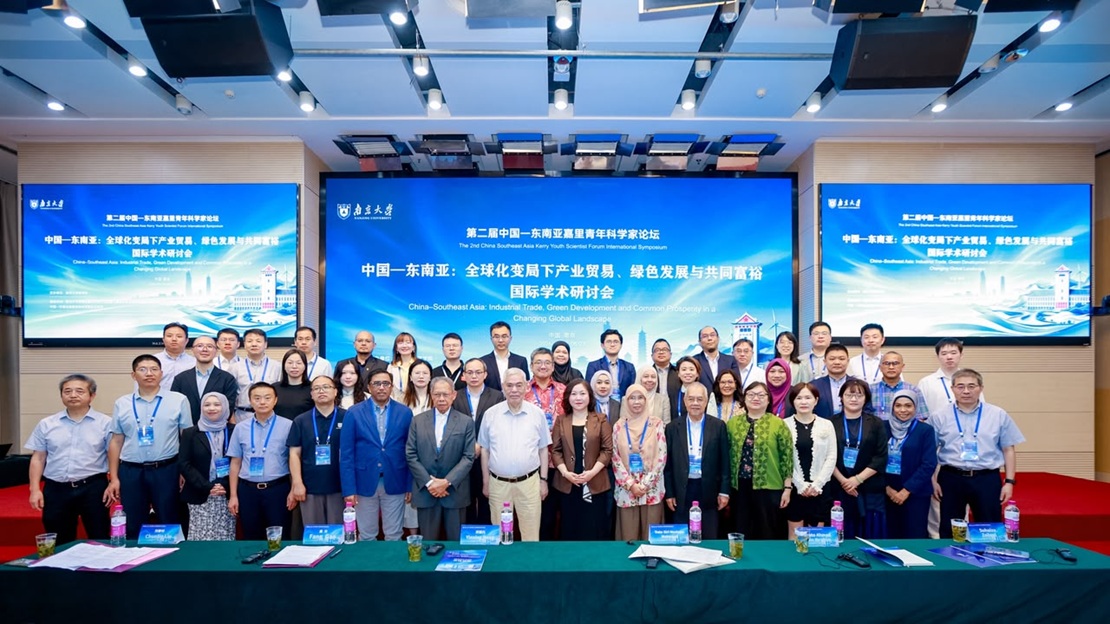
The Malaysia Productivity Corporation (MPC) showcased Akademi Dalam Industri (ADI), Malaysia’s industry-driven talent development initiative at China–Southeast Asia Kerry Youth Scientist Forum
Industry-driven talent development model strengthens Malaysia’s skilled workforce and productivity agenda
NANJING, CHINA, Aug 27 (Bernama) -- The Malaysia Productivity Corporation (MPC) showcased Akademi Dalam Industri (ADI), Malaysia’s industry-driven talent development initiative, at the 2nd China–Southeast Asia Kerry Youth Scientist Forum, held in conjunction with the International Symposium on China–Southeast Asia: Industrial Trade, Green Development and Common Prosperity in a Changing Global Landscape at Nanjing University, China.
Representing MPC, Dr. Noor Aishah Hassan, Deputy Director, People Productivity Division, delivered a keynote speech entitled “Akademi Dalam Industri: Advancing Productivity through Future-Ready Talents.” She highlighted ADI as a key labour market reform initiative designed to address skills mismatch and underemployment while strengthening the link between skills development, wage progression and productivity.
“ADI represents a fundamental shift in the way talent is developed. Instead of training first and employment later, ADI integrates learning directly into the workplace, where skills are developed according to actual industry demand,” said Dr. Noor Aishah.
Under ADI, industries play a central role in identifying the competencies they need, while participants acquire those skills through structured work-integrated learning and workplace-based training. This enables Malaysians to work, learn, gain practical experience and pursue recognised qualifications simultaneously.
For Malaysian workers, ADI provides a clearer pathway to relevant skills, recognised qualifications, career progression and better earning opportunities. For employers, it provides a practical mechanism to develop talent based on real operational and technological requirements, helping businesses improve productivity and competitiveness.
The initiative responds to structural labour market challenges, including skills mismatch and graduate underemployment. International assessments, including the OECD Economic Survey of Malaysia 2026 and the World Bank Malaysia Economic Monitor 2026, have reinforced the importance of addressing skills gaps, improving job quality and strengthening industry involvement in talent development.
ADI is therefore positioned not merely as a training programme, but as an integrated ecosystem connecting industry, workers, education and training institutions, and government agencies. Its career pathway enables individuals to progressively build competencies, workplace experience and qualifications from entry-level employment towards skilled, specialist and industry-expert roles.
This approach is increasingly important as digitalisation, artificial intelligence, automation and changes in global supply chains reshape the skills required by industries. By embedding learning within the workplace, ADI aims to shorten time-to-productivity and create a stronger pipeline of skilled and future-ready Malaysian talent.
The initiative also supports Malaysia’s aspiration to achieve 3.6% annual productivity growth by 2030, increase the share of skilled workers and accelerate the transition towards a high-productivity and high-income economy.
The symposium further highlighted the importance of closer academia–industry collaboration in addressing emerging global challenges and opportunities. Opening remarks were delivered by Prof. Yinxing Hong, Former Secretary of the Party Committee of Nanjing University, and Dato’ Sri Mustapa Mohamed, Advisor of the Ungku Aziz Centre for Development Studies, University of Malaya, underscoring the importance of international partnerships, innovation and talent development.
Convened by Professor Zheng Jianghuai of Nanjing University and Professor Datin Sri Dr. Suhaiza Hanim, an international senior visiting scholar at Nanjing University from the University of Malaya and an Academician of the Academy of Sciences Malaysia, the forum gathered 49 experts and scholars comprising 26 representatives from China and 23 from Malaysia, with keynote presentations delivered across six sessions.
MPC’s participation carried a clear message: Malaysia’s productivity transformation starts with its people. Through ADI, MPC will continue working with industries and strategic partners to equip more Malaysians with relevant skills, create pathways towards higher-value employment and strengthen the competitiveness of Malaysian businesses.
SOURCE: Malaysia Productivity Corporation (MPC)
FOR MORE INFORMATION, PLEASE CONTACT:
Name: Dr. Noor Aishah Hassan
Email: noor_aishah@mpc.gov.my
--BERNAMA